
South African au pair? Here’s what’s different in the Netherlands
In South Africa, “au pair” usually means a childcare job: you drive the children to school and activities, help with homework and get paid by the hour or the month. In the Netherlands, being an au pair is a cultural exchange with clear rules set by the immigration service IND – you live as part of a family for up to twelve months and discover a new country along the way.
| Au pair job in South Africa | Au pair in the Netherlands | |
|---|---|---|
| What it is | A childcare job | A cultural exchange with fixed rules |
| Where you live | Usually in your own home | With your host family – your own room and full board |
| Money | Pay per hour or month | Monthly pocket money, written in your contract – there’s a legal upper limit |
| On top | Depends on the family | Health, liability and accident insurance – usually arranged by the agency and paid by the family |
| Hours | Agreed with the family | Max. 8 hours a day and 30 hours a week, at least 2 days off – in a schedule for all 7 days that you and your family both sign |
| Language | English or Afrikaans | English in many families – plus Dutch, which Afrikaans speakers pick up fast |
| Getting around | A car is often a must | A bike – the children ride along on the back or in a cargo bike |
| Side jobs | Often possible | Not allowed – your permit covers only your work for your host family |
Same love for children, a different adventure: you come home with a second family in Europe – and probably a lot fitter from all that cycling.
Speak Afrikaans? You’re halfway to Dutch. Afrikaans grew out of the Dutch spoken at the Cape in the 17th century, so written Dutch often feels familiar: huis is huis, fiets is fiets, lekker is lekker – and gesellig becomes gezellig, the most Dutch word there is. Spoken Dutch takes a few weeks to tune into; after that, you’ll understand the children on the playground. No Afrikaans? No problem – English gets you far in the Netherlands, and many international families speak it at home.
From South Africa to your host family in 4 steps
Plan about four to six months from your first chat with a family to your flight. Here’s how it works:
Step 1 – Profile & Match
Create your free au pair profile: photos, languages, your experience with children and what you’re hoping for. Verify your ID in a few minutes – it’s free for au pairs and shows families at a glance that you are who you say you are.
Then message host families, get to know them on a video call and take your time. Video calls are easy: South Africa has the same time as the Netherlands in summer and is just one hour ahead in winter. Talk about everything that matters – the children, your daily schedule, your days off, the food, the bike.
Good to know: you can’t be an au pair with relatives – up to cousins, nieces and nephews – or with a family you’ve already worked for. The rule protects the cultural exchange.
Step 2 – Agency & Paperwork
Here’s the Dutch twist: for au pairs from outside the EU, only an au pair agency recognised by the IND (erkend referent) can apply for your permit. Your host family usually chooses the agency and pays for it. Before you commit, check that the agency is listed in the IND’s public register of recognised sponsors – and ask whether it supports families and au pairs who found each other themselves. Many do.
The agency checks you and your host family, prepares your au pair contract – which must not contain a fine if you end your stay early – and then applies for your entry visa (MVV) and your residence permit in one go. Your family also draws up a schedule for all seven days of the week, which you both sign – our weekly schedule tool keeps it within the Dutch limits. The IND tries to decide within two weeks; by law it has up to 90 days.
You pay no placement fees. Dutch law doesn’t allow agencies to charge au pairs from outside the EU – the most you can be asked to pay is €34 for preparation, such as registration or a course.
While the agency works on your application, get ready:
- collect the documents your agency asks for. South African civil documents – for example an unabridged birth certificate or proof of unmarried status – come from the Department of Home Affairs and need an apostille to be valid in the Netherlands (legalisation of South African documents). Documents in English don’t need a translation.
- collect references from babysitting, au pair or other childcare jobs
- consider a first aid course for children
- if you haven’t cycled in years, practise – Dutch children cycle from an early age, and so does their au pair
Step 3 – Embassy Appointment
Once the IND has said yes, you get a positive decision letter. Within three months of that letter you apply for your MVV sticker in person – at the Embassy of the Netherlands in Pretoria or the Consulate-General in Cape Town. Your letter names one of them, but you may choose either.
- Book your appointment online through the link on NetherlandsWorldwide. Slots go quickly – if none are free, try again later.
- Hand in your passport and documents at the appointment (see the checklist below) and choose whether you collect your passport yourself or have it delivered.
- It can take up to 10 working days until your sticker is ready – you get an email. Collecting needs no appointment: Monday to Thursday, 10:00–12:00 in Pretoria or 9:00–12:00 in Cape Town. Bring your collection receipt; someone else can collect for you with it.
Check the name and dates on your sticker straight away and report any error. Your MVV is valid for 90 days – book your flight once you have it and travel within that time. Always follow the current procedure on the website of the Dutch missions in South Africa.
Step 4 – Arrival & Support
Welkom in Nederland! You register at your host family’s address with the municipality (gemeente) and get your citizen service number (BSN). Then you collect your residence card at an IND desk – your agency tells you when and where. If your IND documents say you need a TB test – as a rule they do for South African passports – book it with the public health service (GGD) within three months of getting your residence permit.
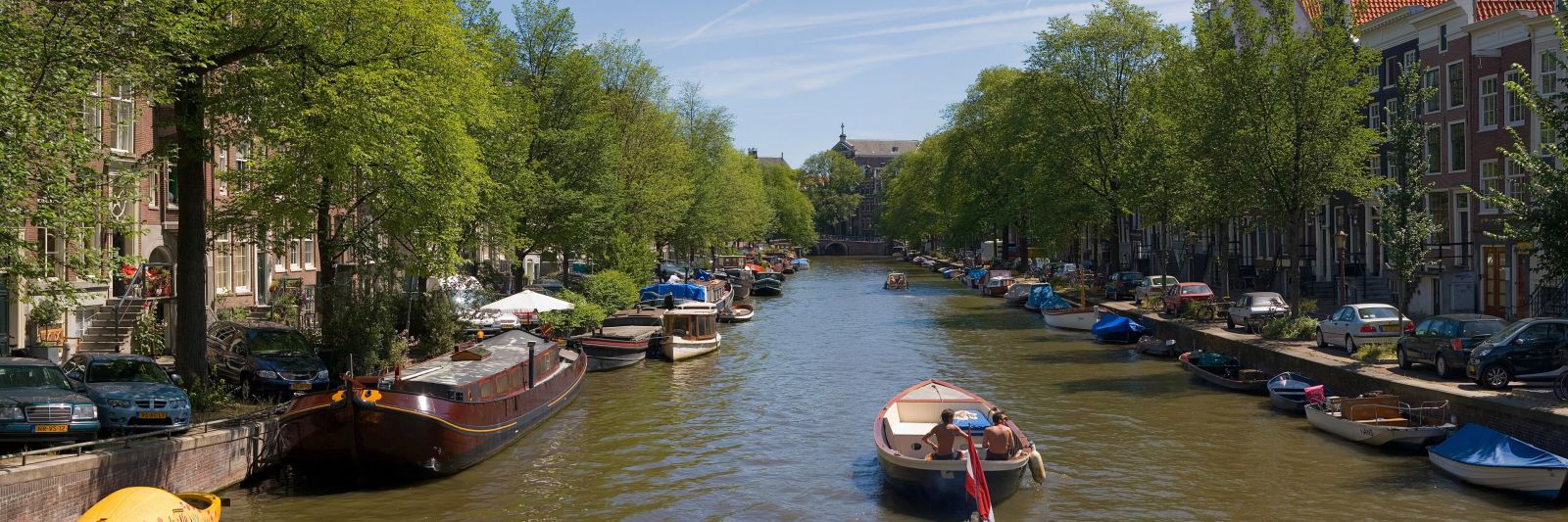
Arriving between November and March? Pack a proper rain jacket – Dutch winters are more grey, wet and windy than snowy. Then life begins: your first ride along the canals, your first stroopwafel fresh from the market, your first weekend in Amsterdam, Antwerp or Paris. And whenever you have a question, the Au Pair Café is there – aunido’s community where au pairs help each other, anonymously if you like.
Your visa checklist
At your MVV appointment in Pretoria or Cape Town (NetherlandsWorldwide, “Apply for an MVV in South Africa”, checked November 2026) – bring:
- your passport, valid for at least 6 more months from the appointment and with at least 2 empty pages – ideally valid for your whole stay
- a copy of your passport’s photo page
- one passport photo that meets the Dutch requirements
- a copy of the IND’s positive decision letter showing your V-number
- all other documents listed in the IND letter, with copies
- not South African? your South African residence permit and a copy
Before that, for your agency – it tells you exactly what the IND needs. Expect:
- your signed au pair contract and the weekly schedule
- the IND forms your agency sends you, signed – including a declaration about your criminal record and your readiness to take a TB test
- South African civil documents if your agency asks for them (unabridged birth certificate, proof of unmarried status) – from the Department of Home Affairs, with an apostille
- a copy of your passport
You don’t pay the IND fee – your agency pays it when it applies.
Do you need an au pair agency for the Netherlands? Yes – but you don’t pay for it.
In the Netherlands, a recognised agency has to apply for your au pair permit – that’s the law. What you don’t need is a middleman to find your family, and nobody may charge you placement fees. The smart route: meet your host family directly on aunido, then let a recognised Dutch agency handle the permit.
| aunido + recognised agency | Traditional agency route | |
|---|---|---|
| Cost for you | €0 on aunido; the agency may charge you max. €34 by law | Same legal limit in the Netherlands – watch out for extra “service fees” from middlemen abroad |
| Contact with families | You message families directly | The agency forwards your profile |
| Speed | Start chatting today | Wait for the agency’s proposals |
| Choice | Every family on aunido that may host a South African au pair | Only the families in that agency’s pool |
| Trust | Verified badge, contact details protected in profiles | Depends on the agency – check the IND register |
| Rules | The search follows Dutch rules for your passport | Advice from the agency |
| Permit | The recognised agency applies – you know every step from our checklist | The recognised agency applies |
Why is aunido free for you? aunido is funded by optional premium memberships for host families. That’s it – no hidden costs, no “activation fee”, no “visa service” for you.
Fair to say: a good agency is a real help in the Netherlands – it checks the family, writes the contract and is there for you if something goes wrong during your stay. aunido doesn’t replace that. It gives you the freedom to choose your family yourself, before an agency takes over the paperwork. Our guide Agency or platform? compares both options.
Red flag: anyone asking you for money. In the Netherlands, au pairs from outside the EU may not pay placement fees – the legal maximum is €34 for preparation. A genuine host family will never ask you to pay for a visa, a “job guarantee” or a flight booked through an agent. You book your MVV appointment yourself, online – and nobody can sell you a “guaranteed visa”. If someone asks you for money, stop the conversation and report the profile. More tips on our safety page.