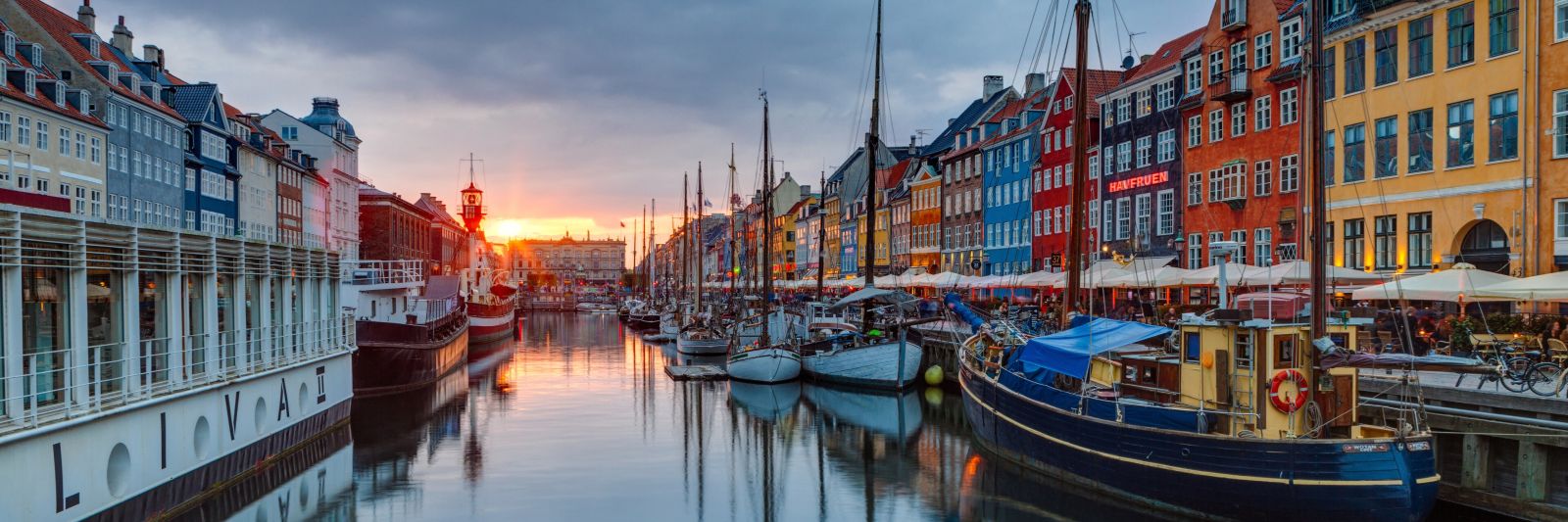
How the au pair program in Denmark works
“Au pair” is French for “on equal terms”: you live with a host family in Denmark for a few months up to two years, look after the children and help with light housework. In return you get your own room, full board, monthly pocket money and insurance.
For au pairs from outside the EU, a stay in Denmark is a cultural exchange with its own residence permit. The authority in charge is SIRI (the Danish Agency for International Recruitment and Integration), and all rules are on the official portal nyidanmark.dk. You don’t need an agency – the family and the au pair apply together.
Requirements for au pairs in Denmark
Which rules apply to you depends on your nationality. You can see the details per nationality above – or check them in one minute with our country check.
Au pairs from the EU, the EEA and Switzerland
- no visa and no au pair permit needed, no agency required
- if you stay longer than three months, you apply for an EU residence document and register with the municipality (kommune) – then you get a CPR number
- there is no legal age limit; most families look for au pairs aged 18 or over
- there are no separate au pair rules for EU citizens. Most families still follow the SIRI rules on working hours, time off and pocket money – put everything in a written contract
Au pairs from all other countries
- at least 18 and no older than 29 – what counts is your age on the day of the application
- never married, never in a registered partnership and never lived with a partner – divorced or widowed applicants don’t qualify either
- no children of your own and not pregnant
- schooling equivalent to the Danish 9th grade
- moderate skills in Danish, Swedish, Norwegian, English or German
- you are not related to the host family and don’t share its nationality
SIRI also checks whether your stay really is a cultural exchange, looking at earlier residence permits and au pair stays, your education and your work experience.
Requirements for host families in Denmark
Would you like to host an au pair in Denmark? Then:
- Your household includes at least one adult and one child under 18, registered at the same address (CPR) – single parents can host an au pair too.
- At least one parent is a Danish citizen, an EU citizen, or has lived in Denmark for a long time with strong ties to the country.
- You have only one au pair at a time; for the handover, two au pairs may overlap for up to 14 days.
- The au pair gets their own room, approved as living space in the Buildings and Housing Register (BBR). Your home also needs a living room and one bedroom per two people.
- Nobody in the household receives benefits under the Danish Active Social Policy Act (aktivloven).
- You pay the one-off Danish lessons fee and take out the required insurance (see below).
Good to know: families who have broken the rules may not host an au pair for a while – ten years after violence or threats against an au pair, five years after illegal employment and two years if, for example, pocket money or insurance were missing.
Working hours, time off and holidays
| Rule |
What applies in Denmark |
| Working hours |
18 to 30 hours a week, 3 to 5 hours a day, on no more than 6 days |
| Days off |
at least 1½ days a week – on a half day off you only work before or only after 2 pm |
| Public holidays |
you are off on official Danish public holidays |
| Holidays |
2.5 days per month with a 6-day week, 2.08 days with a 5-day week; untaken days are paid out at the end |
| Tasks |
childcare and light housework, only in the host family’s home |
| Schedule |
written plan with working hours and days off |
| Language course |
Danish lessons are free for you |
| Insurance |
work injury, leisure accidents plus illness and repatriation, paid by the family |
| Accommodation |
own room and full board – also when you are ill |
| Pocket money |
monthly, also during illness; SIRI sets the minimum every year |
Plan a week within these limits with our weekly schedule tool.
Au pair salary in Denmark – and do you pay tax?
An au pair does not earn a salary but receives monthly pocket money on top of free room, board and insurance. SIRI sets the minimum amount every year; you find the current figure on nyidanmark.dk. The family transfers the money to your Danish bank account by the last banking day of the month – cash payments are not allowed.
Yes, you pay tax: au pair pocket money is taxable in Denmark. With your CPR number you apply for a tax card (skattekort) from the Danish Tax Agency (Skattestyrelsen); the family withholds the tax and pays it over. Without a tax card a much higher rate applies – so sort it out right after you arrive.
You may not take on a side job with an au pair permit: it only allows work in your host family’s home. Unpaid volunteering for an organisation is allowed.
What does an au pair cost a host family in Denmark?
An au pair is cheaper than a nanny, but not free. These are the costs for you as a host family:
- pocket money – every month, at least the amount set by SIRI
- Danish lessons fee – a one-off DKK 20,900 (about €2,800, 2026), only for the au pair’s first au pair application and not refundable
- application fee: DKK 4,305 (about €580, 2026) – you agree who pays it; many families do
- insurance – against work injuries and leisure accidents, plus serious illness, injury and repatriation
- travel – if the au pair comes from outside the EU, the EEA or Switzerland, you pay the journey to Denmark and, under certain conditions, the return journey
- room and board – own room and meals
- getting around, phone and internet – optional, but common; in Copenhagen and Aarhus a bike is usually part of the deal
Estimate your total with the cost calculator and read more in our guide What does an au pair cost?
New rules for 2026: what has changed?
New rates apply to all applications submitted from 1 January 2026: the minimum pocket money has gone up, and the host family’s contribution to Danish lessons is now DKK 20,900. The application fee is DKK 4,305. The other rules – age limit, working hours, days off and maximum duration – stay the same. As SIRI adjusts the amounts every year, always check the current figures on nyidanmark.dk before you apply.
Au pair visa for Denmark: step by step
If you are not from the EU, the EEA or Switzerland, you need a residence permit as an au pair. This is how it works:
- Find a host family and get to know each other by video call.
- Sign the contract – you fill in SIRI’s au pair contract and both sign it.
- Create a case order ID and pay the fee – you open the case on nyidanmark.dk and pay the application fee.
- Apply – the family and the au pair each fill in their part of the online application (AU1) and upload passport, certificates, birth certificate and contract.
- Give your biometrics – within 14 days of applying, you have your photo and fingerprints taken at the Danish embassy or a visa centre.
- Pay the Danish lessons fee – once all other requirements are met, SIRI asks the family to pay. Only then is the permit granted.
- Wait for the decision – processing usually takes about three months, sometimes up to four.
- Travel and register – in Denmark you register with the municipality, get your CPR number and receive your residence card by post. Then you open a bank account and apply for your tax card.
Careful: if you apply while in Denmark on a visitor visa and the application is refused, you may be barred from visitor visas for five years. What counts is always the information on nyidanmark.dk.
How long can you be an au pair in Denmark?
Most au pairs stay one to two years. In total you may live in Denmark as an au pair for no more than two years. The permit ends with your contract at the latest – and on the day the youngest child turns 18. EU au pairs can plan more flexibly; shorter summer stays are possible too.
Allow enough lead time: with the search, your documents and around three months of processing, start four to six months before your preferred start date.
Finding an au pair job in Denmark – with or without an agency?
In Denmark no agency is required – neither for EU au pairs nor for au pairs from other countries. The family and the au pair find each other directly and apply to SIRI together. An agency can help with documents and questions, but it is optional and costs extra.
On aunido you meet directly: the search takes the country rules into account, members can have their identity verified, and contact details in profiles are blocked to protect against fraud. Our guide Agency or platform? compares both options.
Popular cities for au pairs in Denmark
Most host families live in the Copenhagen area – there you quickly meet other au pairs, and many international families speak English at home. Families in Aarhus, Odense and Aalborg look for au pairs too. Bikes and trains get you everywhere, and from Copenhagen you are in Sweden within half an hour.
Host families by city: Copenhagen · Aarhus · Odense · Aalborg
Good to know
Do I need to speak Danish?
No. Moderate English or German is enough for the permit, and many families speak English at home. You learn Danish on site: as an au pair you attend Danish lessons for free – your host family has already paid the fee.
I am 30 or older – can I still be an au pair in Denmark?
Not with a passport from outside the EU, as you must be under 30 on the day of the application. Only au pairs who already live in Denmark and change families may be older. Use the country check to see which countries have a higher age limit – or find out whether your country has a working holiday agreement with Denmark, such as Australia, Canada, Japan, New Zealand or South Korea.
Can I be an au pair in Denmark from the Philippines?
Yes, Denmark is especially popular with au pairs from the Philippines. You also need the exit clearance of the Philippine authorities (“Red Ribbon”), and the host family has its documents authenticated at the Philippine Embassy in Copenhagen.
Our guide Au pair in Denmark from the Philippines walks you through both sets of papers step by step – the SIRI permit, the embassy acknowledgment and the CFO seminar.
Are there live-out au pairs in Denmark?
No. An au pair always lives with the host family and is registered there. Anyone who does not live with the family works as a nanny or babysitter in a regular job, with a wage instead of pocket money.
What goes into an au pair contract?
Tasks, working hours, days off, holidays, pocket money, insurance, travel costs and notice. The au pair can give two weeks’ notice, the family one month’s, both in writing. For au pairs from outside the EU you use SIRI’s contract.
What if it doesn’t work out with the host family?
Talk openly and early – clear arrangements and your shared weekly schedule solve a lot. If it still doesn’t work, you give notice in writing and then have one month to find a new family and submit a new application. Until the new permit is granted you may stay with the new family as a guest, but not work yet; it doesn’t pay the Danish lessons fee again. Tips for a safe search are on our safety page.
Au pair in Scandinavia: Denmark, Norway or Sweden?
All three countries welcome au pairs, but the rules differ. Typical for Denmark: stays of up to two years, no agency needed, and the host family pays the Danish lessons fee. You find the age limit, working hours and pocket money for Norway and Sweden on their country pages. Compare all countries in the overview of au pair programs.
Want to become an au pair in Denmark? Create your free profile and get to know host families. Looking for an au pair as a family? Register for free and find au pairs who suit you.