
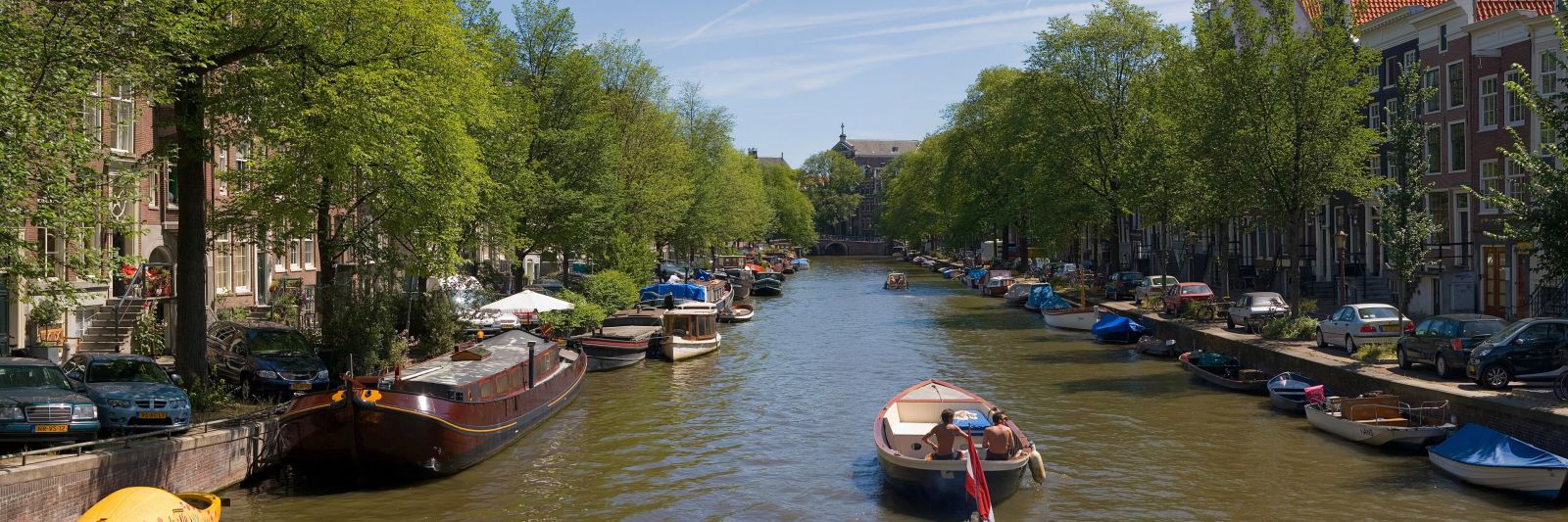
From Kenya to a Dutch family: what feels new – and what feels familiar
Kenya and the Netherlands are closer than the map suggests. A direct flight from Nairobi lands in Amsterdam in around nine hours, and many of the roses in Dutch flower shops were grown around Lake Naivasha. Still, a few things in your host family will be new:
| At home in Kenya | In your Dutch host family | |
|---|---|---|
| Daylight | About 12 hours, all year round | Only about 8 hours in December – and in June it stays light until after 10 pm |
| Getting around | Matatu, boda boda or a lift | A bike – with the children on the back or in a cargo bike (bakfiets) |
| Breakfast | Chai and mandazi | Bread with hagelslag – chocolate sprinkles, and yes, adults eat them too |
| Comfort food | Ugali and sukuma wiki | Stamppot – mashed potatoes with kale, sukuma wiki’s Dutch cousin |
| Tea | Boiled with milk and sugar | Black, no milk – and one biscuit from the tin |
| Weather | Nairobi: mild, with two rainy seasons | Mild summers; grey, wet, windy winters, often just above freezing |
| Sunday | Church, mosque, family visits | Many Dutch families aren’t religious – Sunday means cycling, sports or a walk in the woods |
| Calling home | – | The Netherlands is 1 hour behind Kenya in summer and 2 hours in winter |
Pack for the dark, not just the cold. For many Kenyans, the biggest surprise isn’t the temperature but the light: in December the sun rises around 8:45 and sets around 4:30 pm. A good rain jacket, warm layers and daylight walks with the children help a lot. Dutch health advice also recommends a daily vitamin D supplement for people with darker skin – ask the family doctor (huisarts) once you’re there.
From Kenya to your host family in 4 steps
Plan four to six months from your first video call to your flight. Most of the paperwork happens in the Netherlands – you only need Nairobi at the very end.
Step 1 – Profile & Match
Register for free and build a profile Dutch families want to open: a friendly photo in natural light, the languages you speak – Swahili counts, children love learning jambo and asante – your experience with children as concrete examples, and whether you can cycle and swim, because Dutch families filter for both. Add the Netherlands to your preferred countries: families there see you above au pairs who picked other countries. Verify your ID – it’s free for au pairs, and the badge shows you are who you say you are.
Then message families and meet them on video. With just one or two hours’ time difference, a call after the children’s dinner in Utrecht is still early evening in Nairobi. Ask about the children, the weekly schedule, your room, your days off – and which Dutch agency the family wants to work with.
Kenyan relatives in the Netherlands? The Dutch rules don’t ask where your host parents come from – a Kenyan-Dutch family can host you, as long as they have Dutch nationality or a Dutch residence permit. What isn’t possible: an au pair year with relatives – up to cousins, nieces and nephews – or with a family you’ve already worked for, in Kenya or anywhere else.
Step 2 – Agency & Paperwork
In the Netherlands you can’t apply for an au pair permit yourself, and neither can your host family: only a Dutch au pair agency recognised by the IND (erkend referent) can. Your family usually chooses the agency and pays its fee. Many recognised agencies also work with au pairs and families who found each other on their own – ask before you commit.
The agency checks you both and prepares your au pair contract – which may not make you pay a fine if you don’t fulfil it, for example by leaving early – and the weekly schedule. Our weekly schedule tool keeps it within the Dutch limits. You sign the IND forms the agency sends you, including a declaration about your criminal record and your willingness to take a TB test. Then the agency files one application for your MVV entry visa and your residence permit together. The IND aims to decide within two weeks; the legal deadline is 90 days and can be extended.
You pay no placement fees. The legal maximum for preparation – registration or a course – is €34. That’s roughly KSh 5,000, not the six-figure “processing fees” some agents ask for.
Your Kenyan documents – if your agency asks for civil documents, here’s how they work (legalisation of Kenyan documents):
- copies of your birth certificate come from the Department of Civil Registration in Nairobi
- the Kenyan Ministry of Foreign Affairs legalises documents digitally: you request it on eCitizen and get a PDF with a QR code – one step, no apostille
- documents in English need no translation; anything in Swahili needs a sworn translation
- don’t chase a “certificate of unmarried status”: in Kenya, the Attorney General’s office only issues it to people who are planning to marry – your agency tells you what the IND needs instead
- check that every document spells your names in the same order as your passport – fix differences before you start
While you wait: learn to ride a bike if you can’t yet (a quiet road on a Sunday morning is perfect), take swimming lessons if you need them, consider a first aid course for children and pick up your first Dutch words – hoi (hi), doei (bye), fiets (bike).
Step 3 – Embassy Appointment
Your visa isn’t decided at a counter in Nairobi – the IND has already said yes before you book anything. Once your agency forwards the IND’s positive decision letter, you have three months to book an appointment at the Embassy of the Netherlands in Nairobi to collect your MVV sticker.
- Book online – only through the link on NetherlandsWorldwide. You get a confirmation by email; check your spam folder if it doesn’t arrive. No free slots? Try again later – cancellations open new ones.
- Hand in your passport and documents (see the checklist below). The sticker isn’t issued on the spot: it can take up to 10 working days, and the embassy emails you when your passport is ready.
- Collect your passport and check your name and dates before you leave the counter – report any mistake straight away.
Coming from Mombasa, Kisumu, Eldoret or Nakuru? You need Nairobi twice – once to hand in your passport, once to collect it – so plan two trips or a stay of up to two weeks. Your MVV is valid for 90 days: book your flight once it’s in your passport. Always follow the current procedure on NetherlandsWorldwide.
Step 4 – Arrival & Support
Karibu – or as the Dutch say, welkom! Register at your host family’s address with the municipality (gemeente) to get your citizen service number (BSN), then collect your residence card at an IND desk – your agency tells you when and where. Your au pair tasks only start once you have your residence permit. As a Kenyan citizen you need a TB test: book it with the public health service (GGD) within three months and bring IND form 7604.
Then life begins: your first bike ride in the rain (there will be many), Sinterklaas with your host kids in early December, a frozen canal if winter is kind, weekend trips to Brussels, Paris or Cologne. And whenever you have a question, the Au Pair Café is there – aunido’s community where au pairs help each other, anonymously if you like.
Your visa checklist
At your MVV appointment in Nairobi (NetherlandsWorldwide, “Apply for an MVV in Kenya”, checked November 2026) – bring:
- your passport, valid for at least 6 more months from the appointment, with at least 2 empty pages – ideally valid for your whole stay
- a copy of your passport’s photo page
- one passport photo that meets the Dutch requirements
- a copy of the IND’s positive decision letter showing your V-number
- all other documents the IND letter lists, with copies
- living in Kenya with another nationality? your Kenyan residence permit or a comparable document, plus a copy
Before that, for your agency – it tells you exactly what the IND needs. Expect:
- your signed au pair contract and the weekly schedule
- the IND forms your agency sends you, signed – including the declarations about your criminal record and a TB test
- Kenyan civil documents if your agency asks for them – legalised through eCitizen
- a copy of your passport
The IND fee (currently €423) is paid by your agency or host family – not by you.
Kenyan recruitment agent or Dutch au pair agency? Know the difference
Agencies that recruit Kenyans for jobs abroad can’t get you a Dutch au pair permit. Only a Dutch agency on the IND’s register can apply – and Dutch law doesn’t let it charge you a placement fee. The IND even checks that you haven’t paid fees to any agency or intermediary, Dutch or foreign. So the smart route costs you nothing: find your family on aunido, and let the family’s recognised agency handle the permit.
| aunido + IND-recognised Dutch agency | Agent or “au pair agency” in Kenya | |
|---|---|---|
| Cost for you | €0 on aunido; max. €34 preparation costs by law | “Registration”, “medical” or “processing” fees, often via M-Pesa – not allowed under Dutch rules |
| Who applies for your permit | The recognised Dutch agency, at the IND | No one in Kenya can – they can only pass you on to a Dutch agency |
| Your host family | You choose from every family on aunido that may host a Kenyan au pair | Whoever the agent offers you |
| Contact | Direct messages and video calls with the family | Through the agent |
| Embassy appointment | You book it yourself, online, for free | “Embassy slots” for sale – a warning sign |
| Rules | The search follows the Dutch rules for your passport | Depends on the agent |
Why is aunido free for you? Host families can choose an optional premium membership – that’s what pays for aunido. Au pairs never pay: no activation fee, no visa service, no “priority listing”.
Fair to say: a good Dutch agency is worth a lot – it checks the family, writes the contract and stays your contact if something goes wrong during your year. aunido doesn’t replace it. It lets you choose your family first – more in our guide agency or platform?
Real offer or fake? Five checks before you say yes
- The agency is on the IND register. The IND’s public register “au pair and exchange” lists every recognised au pair agency with its Chamber of Commerce (KvK) number. The list is short and updated monthly – no listing, no permit.
- Nobody asks you for money. Not via M-Pesa, not to a personal account, not for a “medical”, a “job letter” or a “guaranteed visa”. The legal maximum is €34.
- The numbers match the rules. Max. 8 hours a day and 30 a week, at least two days off, pocket money instead of a salary. An “au pair job” with 50 hours a week and a wage to send home is something else.
- You book your own embassy appointment. The only booking link is on netherlandsworldwide.nl. Anyone selling you a slot isn’t genuine.
- The contract has no penalty. Dutch rules don’t allow any contract – with the family, an agency or a recruiter – that fines you if you don’t fulfil it, for example by leaving early. A “bond” you’d have to pay back is a red flag.
Something feels off? Stop the conversation, report the profile and read our safety tips.